By Chris Ross, Joys of Gardening | Photo Credit: Russell Kowalske of Russell K Photo
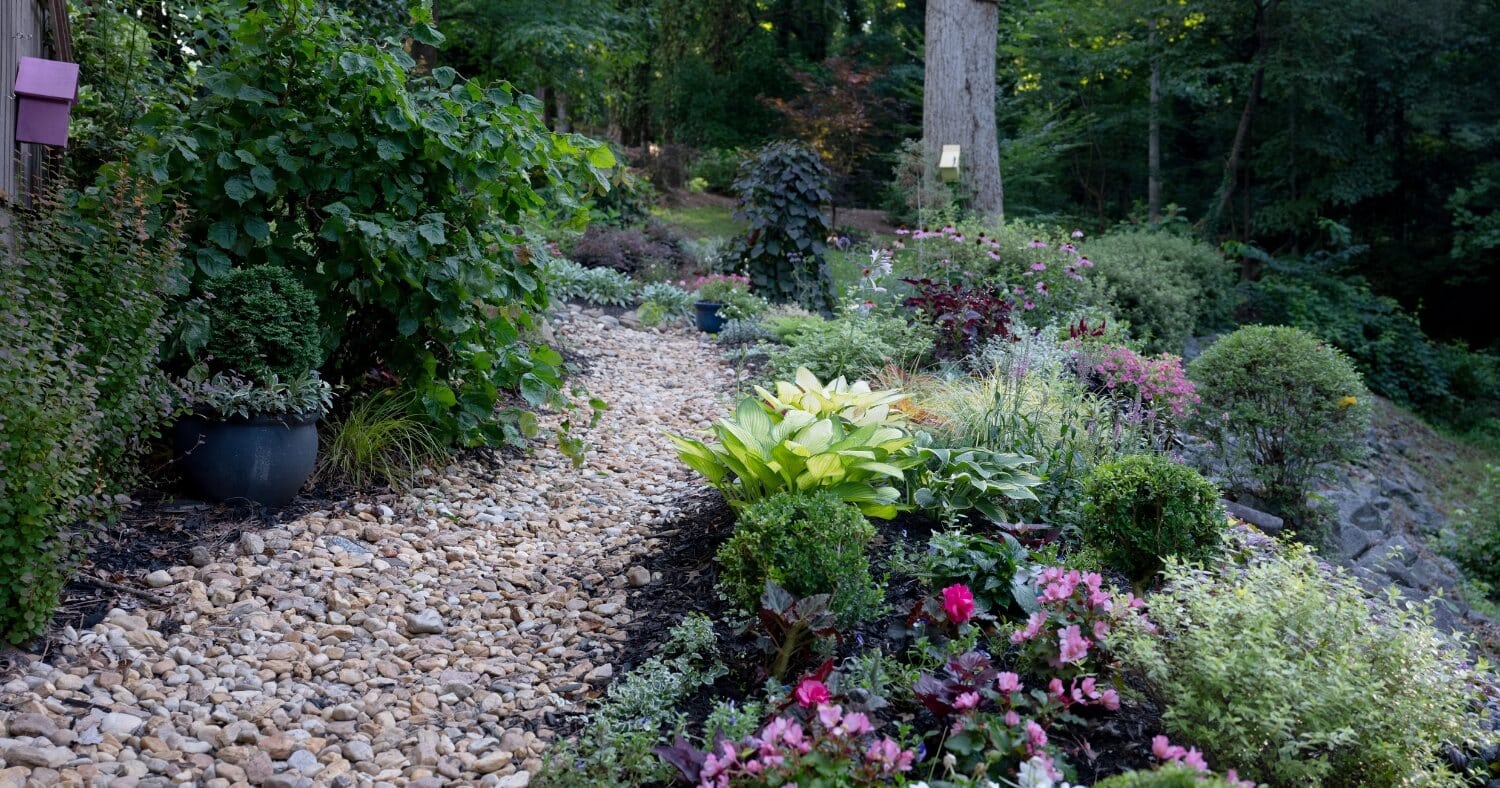
This Georgia woodland garden bed was designed around one core idea: maximum color and texture that lasts all year. Rather than relying only on blooms, the garden design prioritizes foliage, evergreen structure, and layered textures hardy in USDA Zone 8a to keep the landscape visually interesting in every season.
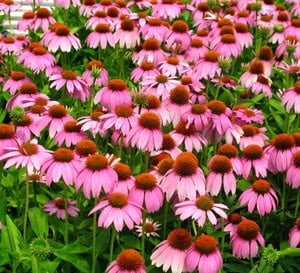
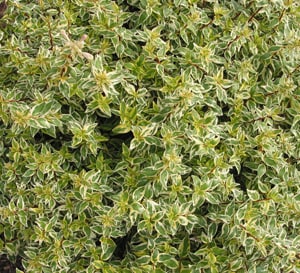
Whether you’re planning a new garden from scratch or updating a tired design, understanding your yard’s sun exposure is key! In this woodland garden, filtered morning light through the bordering forest lends roughly four hours of direct sunlight, and cooling afternoon shade -conditions that are especially valuable in southern gardens. In the Southeast, intense summer heat can stress and scorch plants, making afternoon shade an important part of creating a resilient landscape. This combination of light in a wooded or shade-adjacent garden allows a wide range of plants to thrive while reducing water demands and heat stress. The scope of plants that southern gardeners can grow is widened by our region’s strong sunlight: even sun-loving plants like echinacea and abelia, like my garden’s Suntastic™ ’Radiance’ Abelia, can thrive in part-sun conditions, as seen in this garden bed.
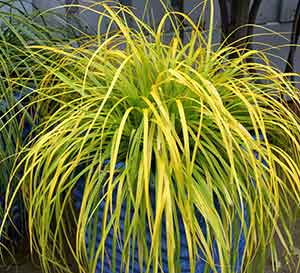
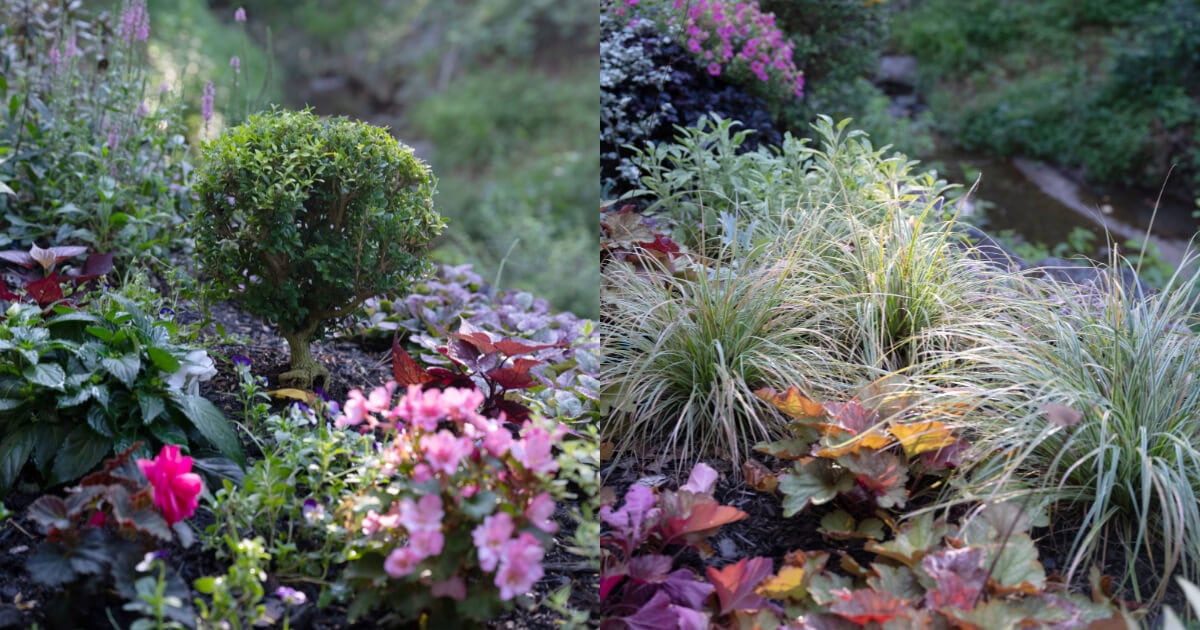 Better Boxwood® and EverColor® ‘Everest’ Carex credit Russell Kowalske of Russell K Photo
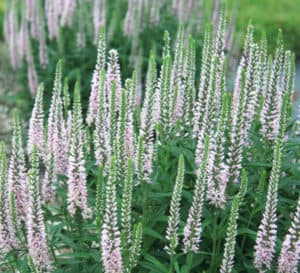
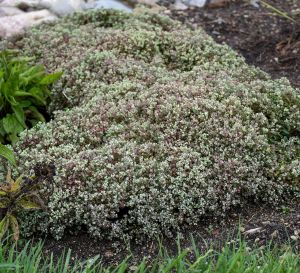
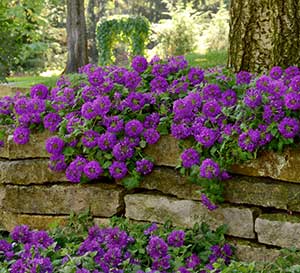
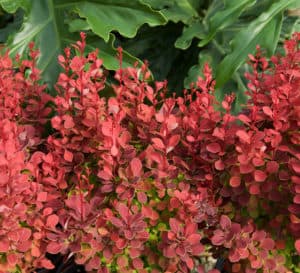
Drought tolerance and low-maintenance plants were major priorities when choosing plants for this design. Heuchera, creeping spruce, verbena, coneflowers, ajuga, Better Boxwood®, Pink Moody Blues™ Veronica, Carex, ‘Orange Rocket’ Barberry, and sedum plants were chosen not only for their color, but also for their ability to perform reliably with minimal intervention. Once established, the evergreens and perennials are largely “set and forget,” requiring only occasional deadheading and seasonal cleanup.
When designing this garden bed, I was also conscious of sourcing plants that support pollinators. Pink Moody Blues™ Veronica, sedum, coneflowers, and verbena attract bees and butterflies throughout the growing season, bringing movement and life into the garden daily. I’ve noticed the pollinators are most active during the first sunlight of the day, as it reaches the coneflowers and veronica, creating a sense of synchrony between my waking and theirs. A small pink bee hotel tucked into the space provides a safe nesting area for wood bees, allowing them to lay eggs and shelter naturally within the garden.
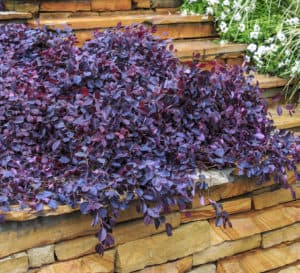
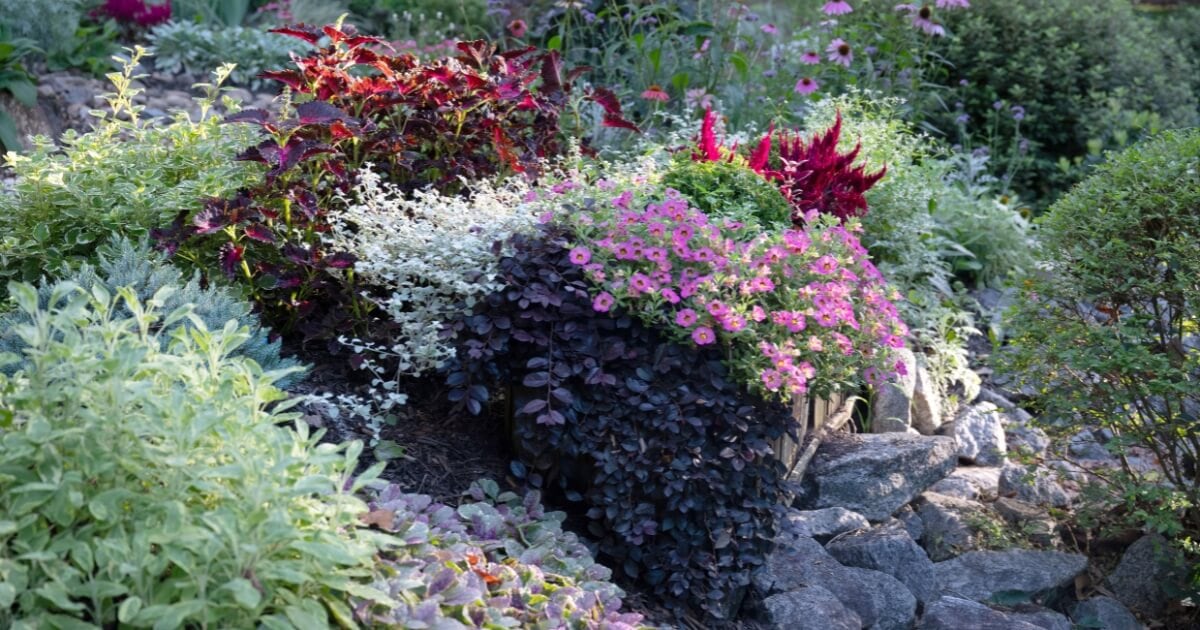 Purple Pixie® Dwarf Weeping Loropetalum, credit Russell Kowalske of Russell K Photo
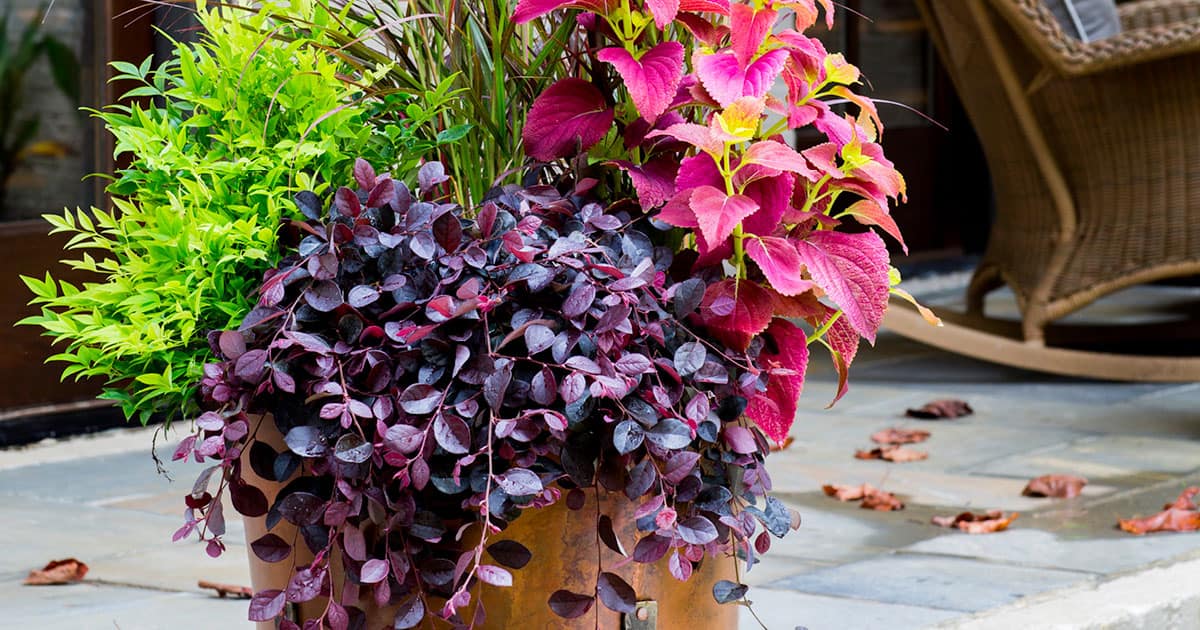
Evergreens are the backbone of the design, anchoring the space and providing color and structure between flowering cycles. EverColor® ‘Everest’ Carex, Better Boxwood®, and Loropetalums like Purple Pixie® Dwarf Weeping Loropetalum are surrounded by pockets of annuals that provide bursts of seasonal color.
One of the defining features of the garden is the stone pathway. Instead of sharp borders or rigid lines, the path curves softly through the space with relaxed, undefined edges. I intentionally allowed the pathway to feel slightly imperfect because I wanted the garden to feel relaxed, natural, and as though it had slowly evolved over time.
The result is a woodland garden that has maximum color and structure while also remaining low-maintenance, drought-tolerant, and interesting year-round.