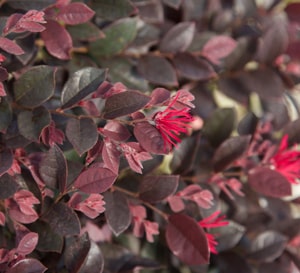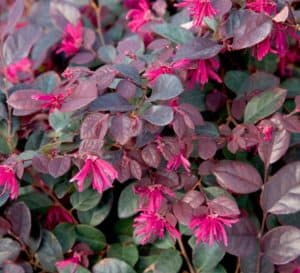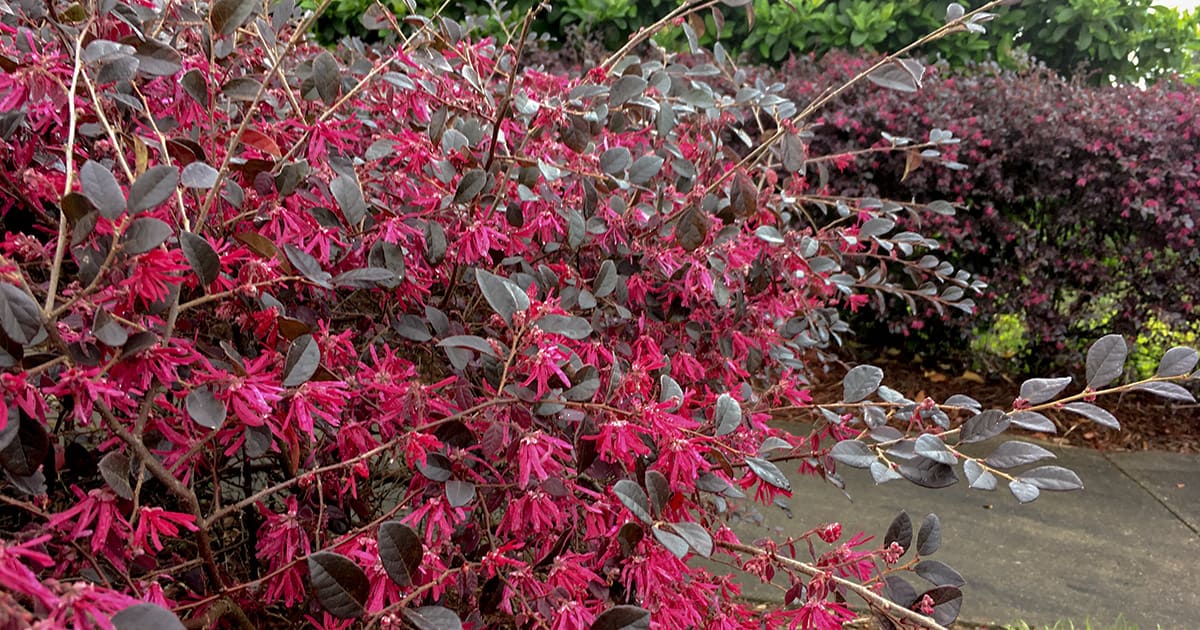
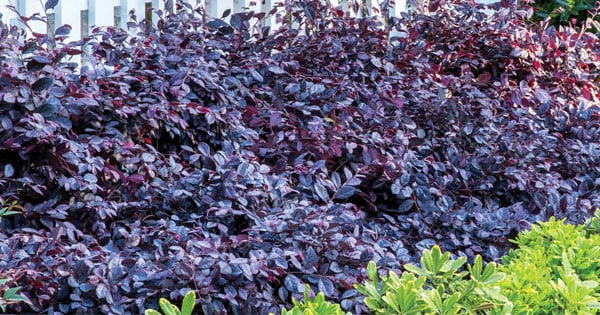
Purple Diamond® Semi-dwarf Loropetalum is the kind of shrub that earns its keep all year long. With rich purple foliage that holds its color through the seasons, bright pink blooms in spring, and a more manageable size than old-fashioned loropetalums, it brings bold color and structure to the landscape without demanding constant pruning. It thrives in full sun to part shade and works beautifully in mixed beds, foundation plantings, hedges, and mass plantings.
Whether you’re refreshing a front bed or looking for a hardworking evergreen shrub that adds color in every season, Purple Diamond® makes an easy fit. Here’s how to plant it, care for it, and put it to work in the landscape.
Purple Diamond® Semi-Dwarf Loropetalum at a Glance
- Botanical name: Loropetalum chinense ‘Shang-hi’ PP18331
- Common name: Purple Diamond® Semi-dwarf Loropetalum
- USDA zones: 7a–10b
- Light: Full sun to part shade
- Mature size: 4 to 6 feet high and 4 to 5 feet wide
- Water needs: Medium
- Flowering season: Spring, with occasional repeat bloom in summer
- Key features: Compact habit, deer resistance, disease and pest resistance, reblooming, water-wise performance, and year-round interest
- Best uses: Accent, hedge, container, mass planting, and slope plantings
How to Plant Purple Diamond® Loropetalum
Getting Purple Diamond off to a strong start is simple. Choose a spot with full sun to part shade and well-drained soil. Give the plant enough room to reach its mature size so its naturally graceful, fountain-like form can develop without crowded pruning later on. Purple Diamond® tops out at about 4 to 6 feet tall and 4 to 5 feet wide, making it easier to place than oversized older loropetalum varieties.
Follow these planting steps:
- Water the plant well before planting.
- Dig a hole twice as wide as the pot.
- Set the plant 1 to 2 inches above the surrounding soil level.
- Backfill with the native soil.
- Water deeply to settle the soil, then add more soil if needed.
- Mulch 1 to 2 inches deep around the plant, keeping mulch away from the main stem.
Planting slightly high helps improve drainage around the crown, which is especially useful in heavier Southern soils. Once planted, keep the root zone evenly moist while the shrub establishes.
Where to Plant Purple Diamond® Loropetalum
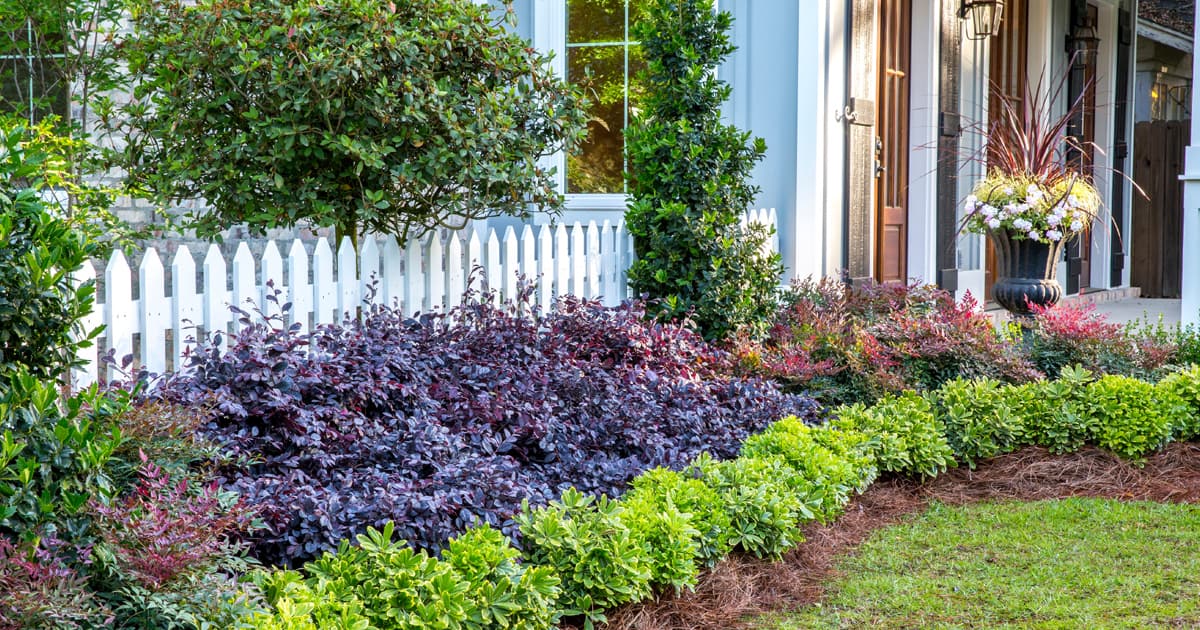
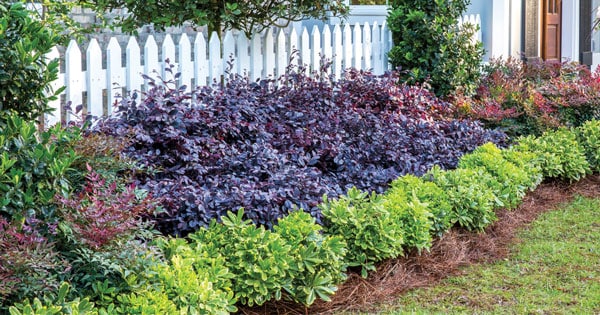
One of Purple Diamond®’s biggest strengths is how easily it fits into the landscape. Because it handles full sun to part shade, it works well in those tricky transition areas where light changes throughout the day. Its deep purple foliage adds contrast in spring and summer, then keeps carrying color through fall and winter when many beds start to fade.
Try it in:
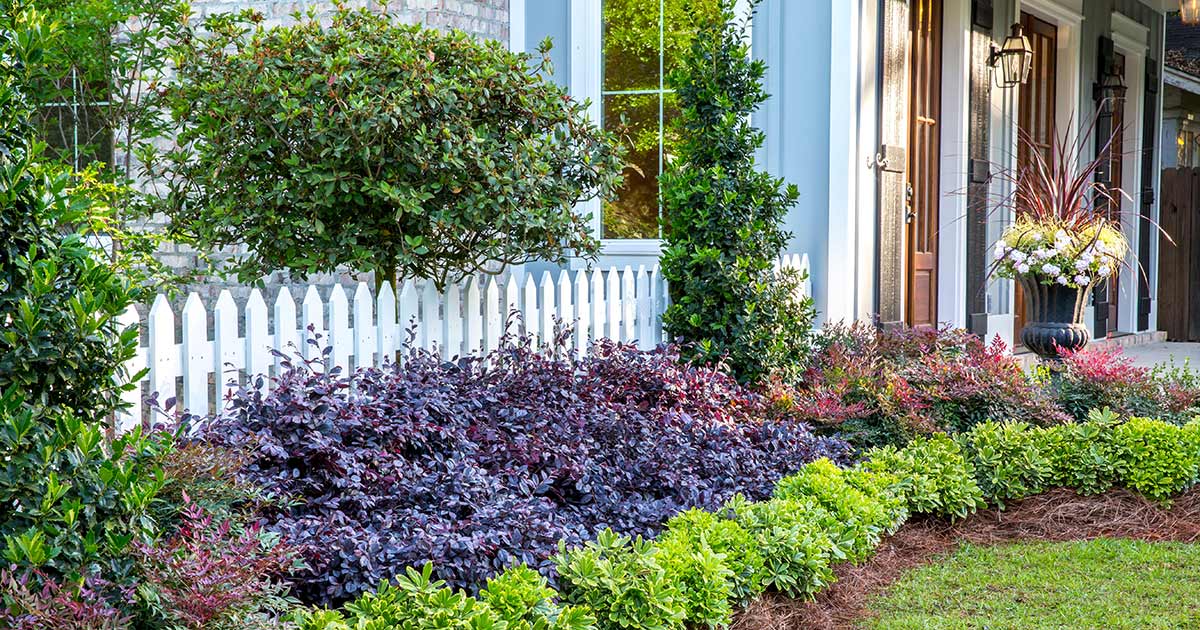
- Foundation beds where you want evergreen structure and season-long color
- Mixed borders where purple foliage can anchor brighter blooms and lighter foliage
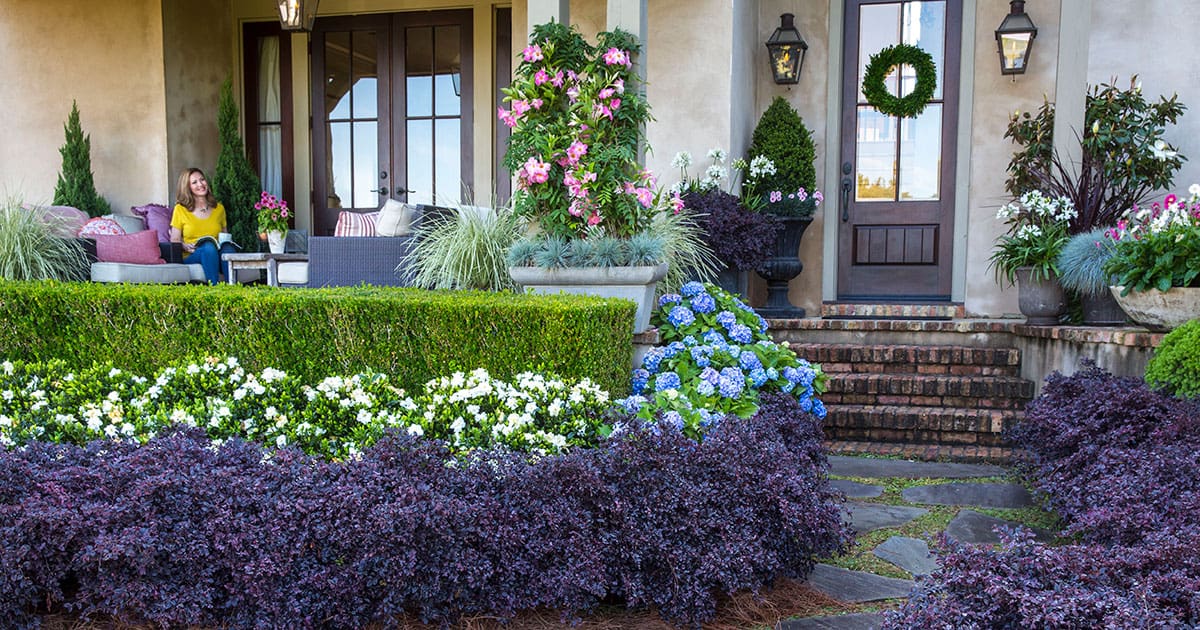
- Entrance plantings where its rich color creates year-round curb appeal
- Hedges when you want a more refined, lower-maintenance alternative to oversized loropetalums
- Slope plantings where grouped shrubs can help stabilize soil and suppress weeds
- Mass plantings for bold color repetition across a larger area
Using Purple Diamond® as an Accent Shrub
The fountain-like form and saturated purple foliage make Purple Diamond® a natural accent shrub. Use it to create a focal point in a front bed, highlight an entry, or break up a stretch of green in a mixed planting. The dark foliage reads almost like a neutral, pairing beautifully with green, blue, chartreuse, and even silver-toned plants.
Because the foliage keeps its rich color through summer heat and winter chill, Purple Diamond® brings lasting visual weight to the landscape. That makes it especially useful near porches, walkways, and other highly visible parts of the yard where you want the garden to look polished in every season.
Using Purple Diamond® in Hedges and Mass Plantings
If you love the look of loropetalum but not the constant trimming that larger types can require, Purple Diamond® is a smart solution. Its semi-dwarf habit makes it easier to use as a hedge or grouped planting without overwhelming the space. Plant it in a row to create a colorful evergreen screen, or repeat it in drifts through a sunny border for rhythm and continuity.
On slopes, mass plantings of Purple Diamond® do double duty. The shrubs create striking swaths of color while also helping to cover bare ground, reduce weeds, and stabilize the soil. In larger beds, repeating the same plant several times gives the design a more intentional, finished look.
Purple Diamond® Loropetalum Care Tips
Purple Diamond® is a relatively easy-care evergreen once established. It prefers regular watering during establishment, then settles into a medium-water routine. Like other Southern Living Loropetalums, it is valued for its compact size, year-round foliage color, and lower-maintenance habit.
A few simple care tips will keep it looking its best:
- Light: Plant in full sun to part shade for best growth and color.
- Water: Water regularly after planting until established, then as needed to maintain evenly moist but not soggy soil.
- Mulch: Add a light layer of mulch to help conserve moisture and moderate soil temperatures.
- Fertilizer: Feed yearly in late spring.
- Pruning: Shape in early spring before the first flush of growth. Avoid excessive shearing, which can interfere with the shrub’s naturally graceful form.
Because Purple Diamond® already has a compact habit, it typically needs far less pruning than older loropetalum selections. That makes it a strong choice for gardeners who want bold foliage color without signing up for constant maintenance.
Have more questions about pruning Loropetalum? Read our Southern Living Loropetalum Pruning Guide.
Frequently Asked Questions
How big does Purple Diamond loropetalum get?
Purple Diamond Semi-dwarf Loropetalum matures at about 4 to 5 feet tall and 4 to 5 feet wide. Its compact size makes it a good fit for smaller landscapes, foundation beds, and front yard plantings where full-size loropetalums may become too large.
Is Purple Diamond a dwarf loropetalum?
Purple Diamond is considered a semi-dwarf loropetalum. It stays smaller and more manageable than older, larger loropetalum varieties, but it is not as small as a true dwarf selection. That makes it a great choice when you want bold color without an oversized shrub.
Can compact loropetalum be used as a hedge?
Yes, compact loropetalum can be an excellent hedge plant. Purple Diamond works especially well for colorful low hedges, border plantings, and mass plantings. Its naturally arching habit creates a softer, more graceful look than a tightly clipped hedge.
Is loropetalum good for foundation plantings?
Yes, loropetalum can work beautifully in foundation plantings, especially more compact selections like Purple Diamond. Its manageable size, rich evergreen foliage, and spring blooms add long-lasting color and structure near the home. It looks especially striking against lighter-colored facades.
What pairs well with purple loropetalum?
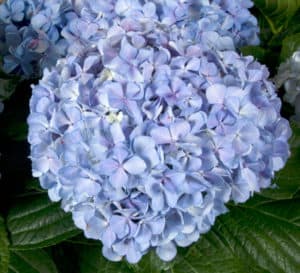
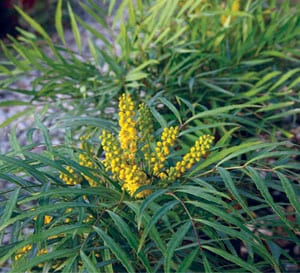
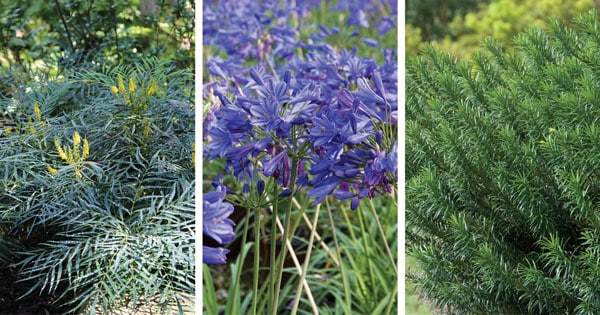
Purple loropetalum pairs well with plants that provide contrast in color, texture, or form. Try combining it with gold or chartreuse foliage, silver-blue tones, ornamental grasses, ‘Soft Caress’ Mahonia, Little Blue Fountain Agapanthus, Yewtopia Plum Yew, or hydrangeas for a balanced look.
Not sure which loropetalum is right for your space? This purple loropetalum guide breaks down some of the best purple loropetalums to know and grow.