Southern Living® Yew (Plum Yew): Elegant, Shade‑Loving Evergreens for the South
Plum yews (Cephalotaxus spp.) are the go‑to evergreens when you need refined texture and reliable performance in part shade to full shade. Unlike common yews (Taxus), plum yew selections thrive in Southern heat and humidity, offer notable drought tolerance once established, and keep their deep green needles year‑round with minimal pruning. Use them to add calm structure beneath trees, anchor shady foundations, or create low, polished hedges where many shrubs struggle.
Why Choose Plum Yew
- Shade savvy: Truly at home in partial shade to shade, yet adaptable to bright morning sun.
- Southern tough: Heat-tolerant and resilient through dry spells once rooted.
- Low‑maintenance: Slow, steady growth with little shearing needed to stay neat.
- Design-friendly: Fine, glossy needles and a composed habit that reads sophisticated in every season.
Featured Southern Living® Selection
Yewtopia® Plum Yew (Cephalotaxus harringtonia ‘Plania’)
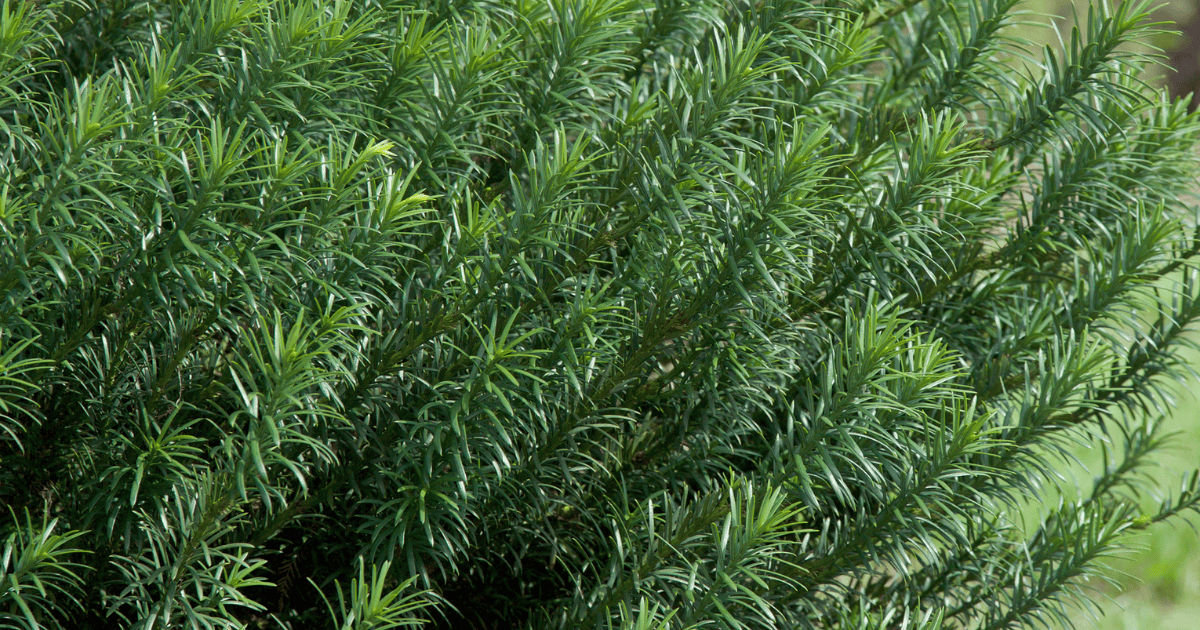
A compact, slightly upright, vase‑like form that brings nuanced texture and four‑season color to shaded beds and borders. Ideal for massing as a low hedge or spotlighting as a single, sculptural accent.
- Mature size: ~3–4′ high × 3–4′ wide
- Light: Partial shade to shade
- Zones: USDA 6a–10b
- Habit: Naturally tidy, slowly fills into a soft, evergreen mound
- Uses: Woodland foundations, shaded borders, mass plantings, containers in dappled light
Planting & Establishment
Choose a site with well‑drained soil—from amended garden loam to native clay improved with organic matter. Set the root ball at or slightly above grade, water to settle, and apply 2–3 inches of mulch to conserve moisture and cool roots (keep mulch a few inches off stems). In the first season, maintain even moisture; afterward, water deeply but infrequently.
Care Made Simple
- Feeding: A light, slow‑release fertilizer in early spring supports steady growth.
- Pruning: Minimal. Tip‑shear after new growth hardens only if you want crisper lines.
- Heat & drought: Once established, plum yew is drought-tolerant and holds color through summer heat.
- Pests & deer: Generally deer‑resistant and low‑trouble in Southern landscapes (pressure varies by region).
Hedges, Spacing & Layout
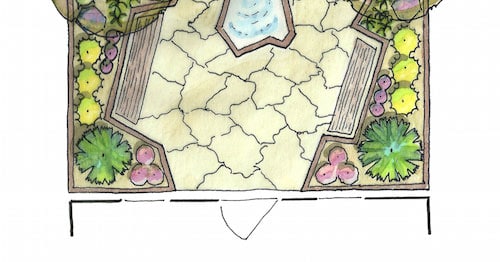
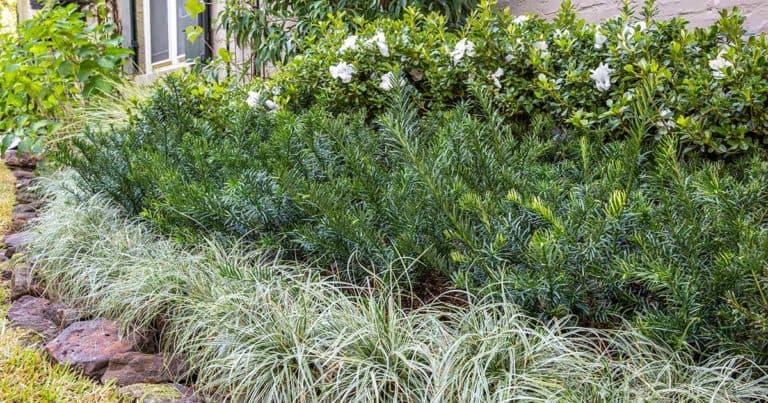
For a soft, evergreen plum yew hedge at 3–4 feet tall, space plants 30–36 inches on center to knit into a continuous line; widen to 36–42 inches for distinct, individual mounds with air between. Along paths, repeat at measured intervals to guide the eye and provide winter structure where perennials ebb.
Where Plum Yew Shines
- Shade borders & understory pockets: Evergreen depth beneath oaks, magnolias, and pines.
- Foundations on north/east sides: Calm, polished green that doesn’t outgrow the space.
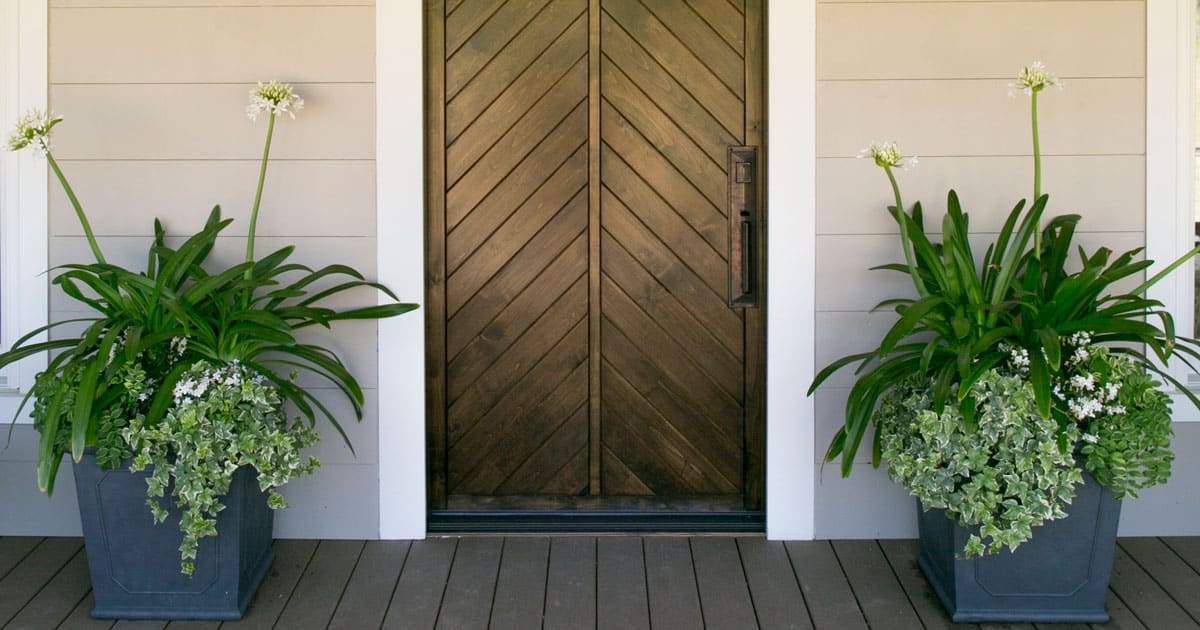
- Containers in dappled light: A refined, four‑season anchor for porches and courtyards.
- Modern, low‑care designs: Slow growth and natural symmetry read curated without constant maintenance.
If you need an evergreen that stays compact, tolerates shade, and looks impeccably tailored with little effort, plant Southern Living® plum yew. From low hedges to sculptural accents, these shade‑smart evergreens bring year‑round structure and quiet elegance to the hardest-working, least sunny parts of your garden.