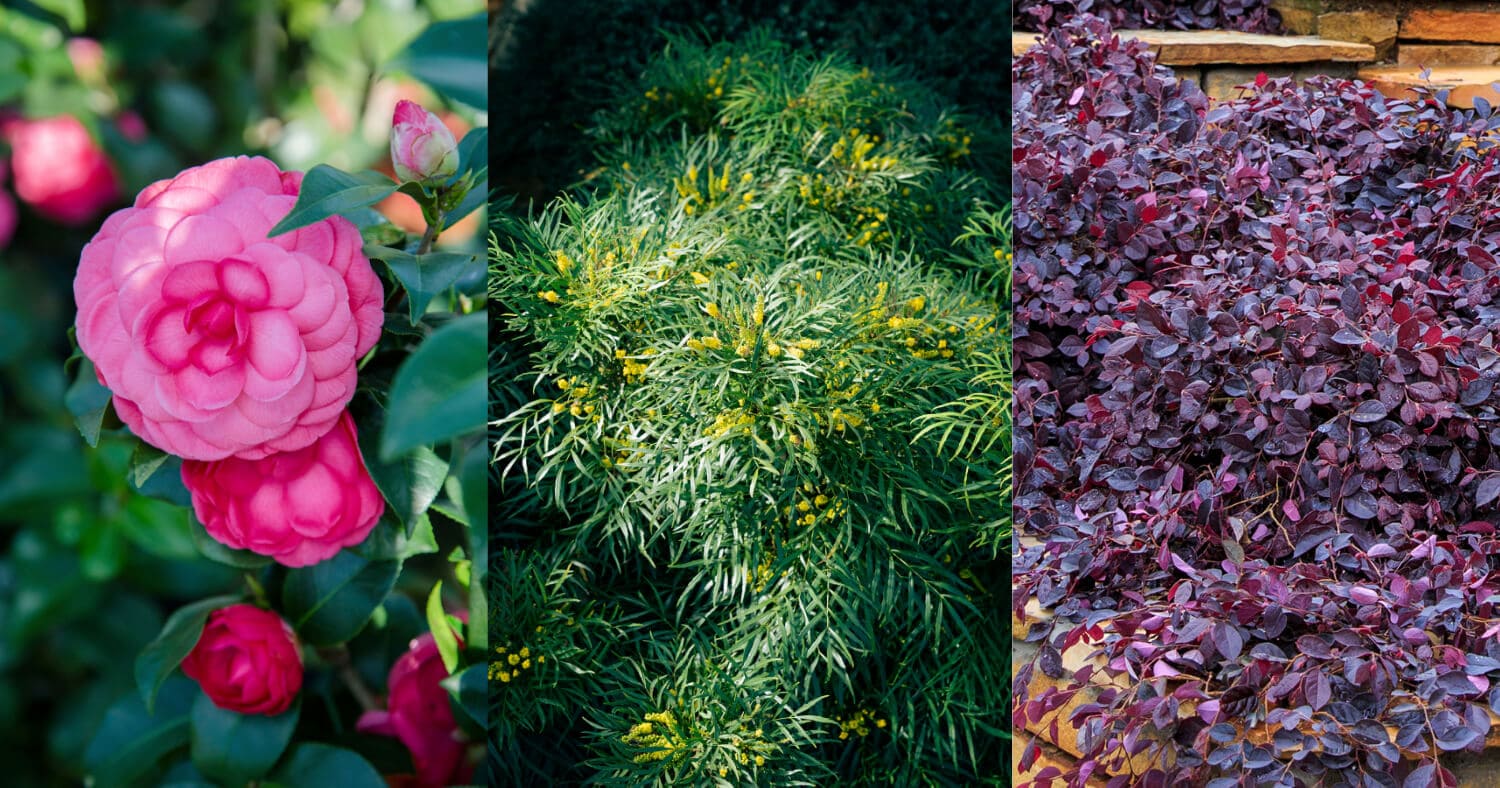
Wondering what to plant with camellias? The right companion plants can add layers of color, texture, and evergreen structure while still letting the camellia remain the focal point. In this planting plan, ‘Soft Caress’ Mahonia creates a medium-height evergreen layer behind low-growing Purple Pixie® Dwarf Weeping Loropetalum. Together, they complement the camellia with contrasting foliage, different mature heights, and a more finished layered look.
What Grows Well With Camellias?
Good companion plants for camellias should share compatible light, hardiness, moisture, and drainage needs while contributing something different to the design. For this planting, ‘Soft Caress’ Mahonia brings fine, feathery foliage through the middle of the bed, while Purple Pixie adds a low sweep of deep purple foliage in front. The result is a layered evergreen planting with distinct plant roles rather than one solid mass of similar shrubs.
Before You Plant
Before choosing plants, take a quick look at your site. This planting is suited to USDA Zones 7–9, the shared hardiness range of the featured plants. A location with part shade provides compatible light for the entire planting. ‘Soft Caress’ grows in part shade to shade, while the featured camellias and Purple Pixie can grow with varying amounts of sun and partial shade. Good drainage is also important. Avoid areas where water regularly stands after rain. Finally, make sure the bed has enough room for the plants at maturity. The camellia will become the largest shrub in the design, so choosing the right one is the best place to start.
Choose the Camellia That Fits Your Space
The camellia anchors the back of the bed and sets the scale for the rest of the planting.
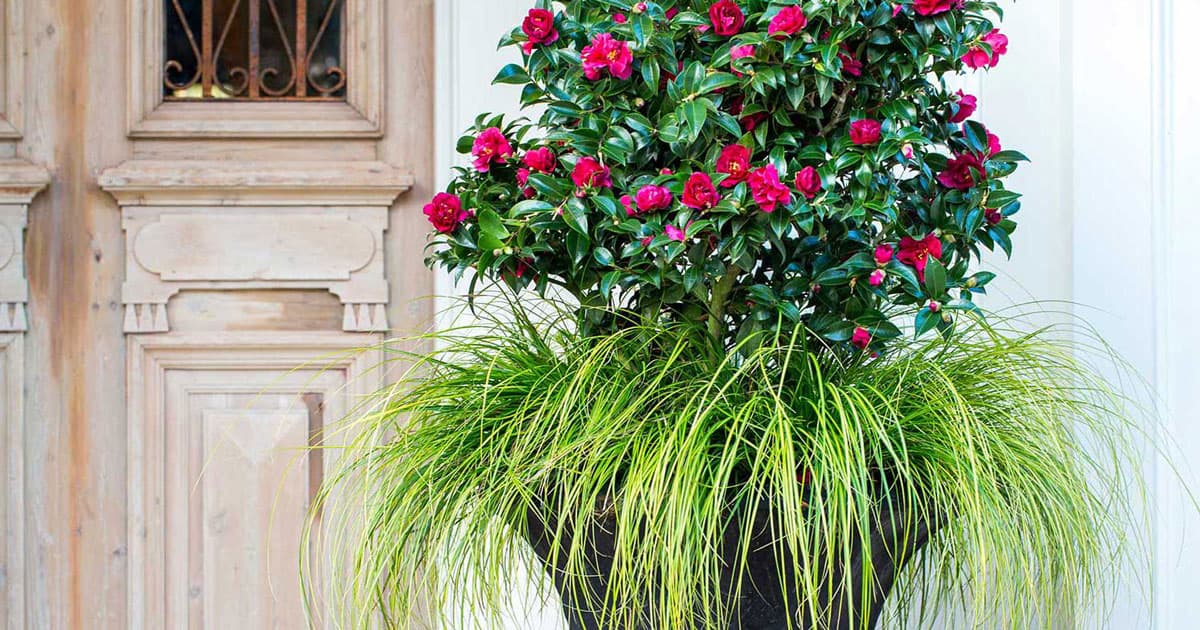
Early Wonder Camellia: Early Wonder grows 6–8 feet tall and 4–6 feet wide with an upright habit. Lavender-rose formal double flowers add fall color against dark evergreen foliage. Its narrower mature spread makes it a good option when you want the height of a camellia without using quite as much width.
October Magic Ivory Camellia: October Magic Ivory reaches 6–8 feet tall and 5–7 feet wide. Creamy white, fully double flowers with ruffled petals appear in fall, creating a softer, more neutral focal point for the bed.
‘Yuletide’ Camellia: ‘Yuletide’ grows 8–10 feet tall and 6–8 feet wide, making it the largest of the three choices. Bright red single flowers with contrasting yellow stamens stand out against glossy evergreen foliage. Choose ‘Yuletide’ where there is enough room for its broader mature spread.
Choose Your Companion Plants
Once you’ve selected the camellia, add two contrasting shrubs to build the lower layers of the bed.
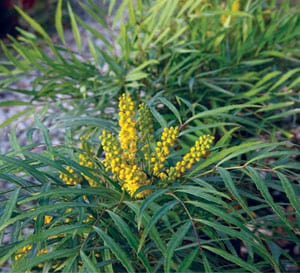
‘Soft Caress’ for the Middle Layer: ‘Soft Caress’ grows about 3 feet tall and 3.5 feet wide. Its fine, feathery evergreen foliage creates a noticeable contrast with the camellia’s broader leaves. Bright yellow flowers add another point of interest during the cooler months.
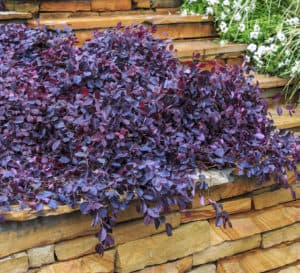
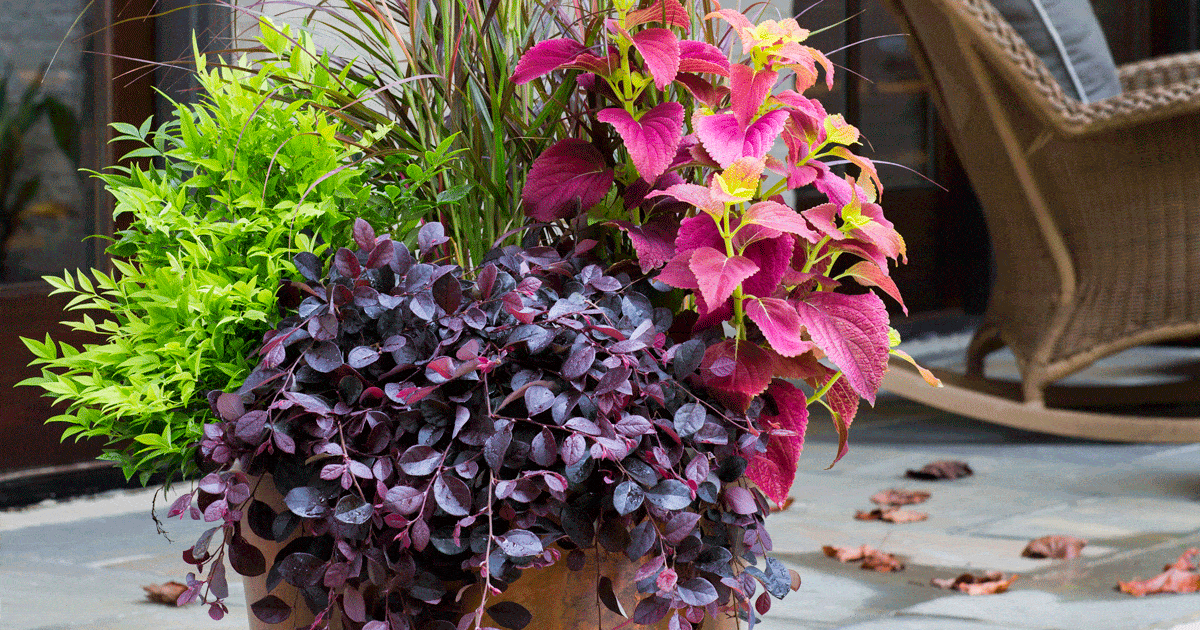
Purple Pixie for the Front: Purple Pixie Loropetalum stays just 1–2 feet tall and spreads about 3–4 feet wide. Its low, weeping habit makes it well suited to the front of the bed, where it can spread without blocking the shrubs behind it. Rich purple evergreen foliage adds contrast, while pink ribbon-like flowers bring spring color. Three Purple Pixie plants curved along the front help soften the edge of the planting and keep the arrangement from feeling too formal.
Ready to Get Planting? Here’s What You’ll Need:
- 1 camellia: Early Wonder Camellia, October Magic Ivory Camellia, or ‘Yuletide’ Camellia
- 3 ‘Soft Caress’ Mahonias
- 3 Purple Pixie Dwarf Weeping Loropetalums
How to Landscape With Camellias and Companion Plants
1. Arrange the Plants Before You Dig
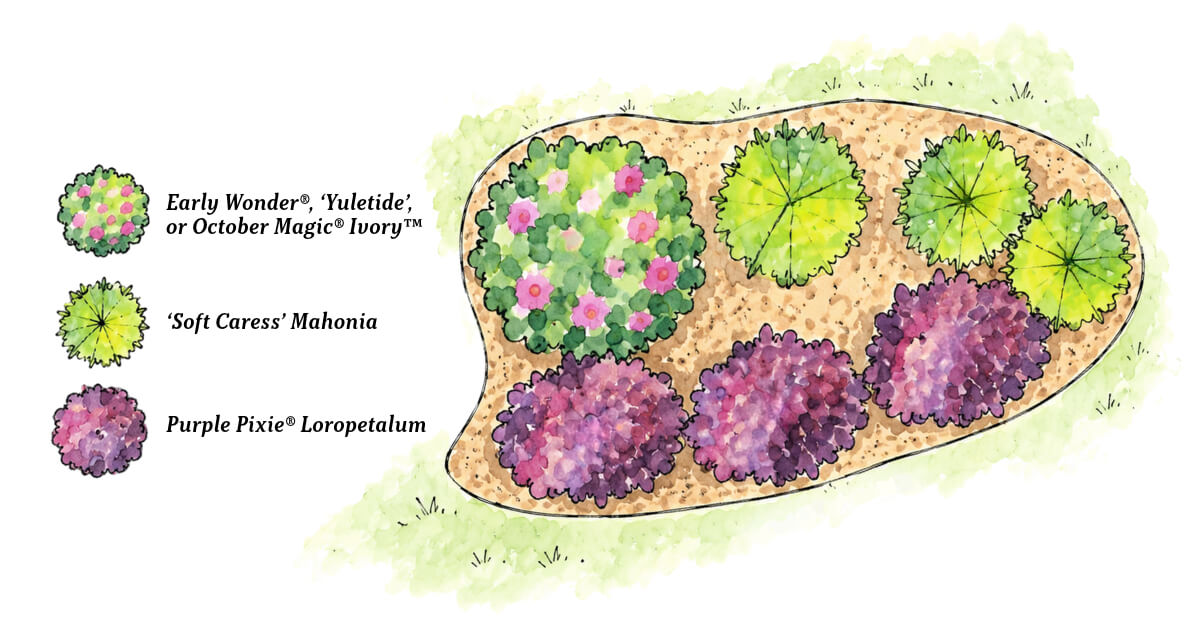
Set all seven plants in the bed while they are still in their nursery pots. Start by placing the camellia toward the back left of the planting. Position the three ‘Soft Caress’ Mahonias across the back and middle right, then curve the three Purple Pixie plants along the front edge. Stagger the shrubs rather than lining them up in rigid rows. Step back and look at the arrangement from the direction you’ll see it most often, whether that’s a walkway, driveway, window, or patio. Adjust the pots until the bed feels balanced.
2. Measure the Spacing
Use these approximate distances as a starting point, measuring from the center of one plant to the center of the next:
- 3.5 feet between the mahonias
- About 4 feet between the loropetalums
- About 4 feet between neighboring mahonia and loropetalum plants
- 5–6 feet from Early Wonder or October Magic Ivory Camellia to the nearest companion plant
- About 6 feet or more from ‘Yuletide’ Camellia to the nearest companion plant
These measurements are intended to help recreate the layered look shown in the planting guide. Adjust them as needed for your space, keeping each plant’s mature width in mind.
3. Water Before Planting
Water each shrub thoroughly while it is still in its nursery pot. This helps keep the root ball moist while you work and prepares the plant for the move into the landscape.
4. Dig Wide, Not Too Deep
Dig each hole about twice as wide as the root ball. Set the plant so the top of the root ball sits about 1–2 inches above the surrounding soil level.
5. Backfill and Water Thoroughly
Backfill around the sides of each root ball with the soil removed from the hole. Water thoroughly after planting to help settle the soil around the roots. If the soil settles and leaves gaps around the sides, add a little more as needed without covering the top of the root ball.
6. Add Mulch
Spread a 1–2-inch layer of mulch over the planting area. Keep the mulch pulled back from stems and trunks rather than piling it directly against the plants.
7. Watch the Moisture While the Plants Establish
Check the root balls and surrounding soil regularly after planting. Water deeply as needed to keep the soil appropriately moist while roots establish, adjusting for rainfall, temperature, and drainage. Avoid keeping the planting area constantly soggy.
A Layered Look That Lasts Beyond Bloom Season
The camellia may be the star of this planting, but the supporting plants are what make the whole composition work. Fine green mahonia foliage breaks up the camellia’s broader leaves, while Purple Pixie brings a low sweep of deep purple across the front. Start with the camellia that suits your garden, give each plant room to reach its mature size, and let the differences in height, foliage, and form do the rest.
Ready to start planting? Explore these plants and more online and use our garden center locator to find a retailer near you.