Shady areas are often treated as problem spots, but they can become some of the most inviting parts of the landscape. Beneath tree canopies, beside covered porches, and along sheltered foundations, foliage color, texture, and plant form can create interest even when flowers are not the main attraction.
The key is choosing shrubs that bring more than one season of beauty. Variegated leaves can brighten darker corners, evergreen foliage provides dependable structure, and compact forms help define borders and foundation plantings without overwhelming the space. Some shrubs also develop richer pink, red, gold, or copper tones as temperatures cool, adding even more color later in the year.
Not sure where to start? These five Southern Living® Plant Collection shrubs offer a mix of colorful foliage, graceful form, seasonal blooms, and year-round texture for the shade garden.
Explore the collection online and use our Garden Center Locator to find a retailer near you.
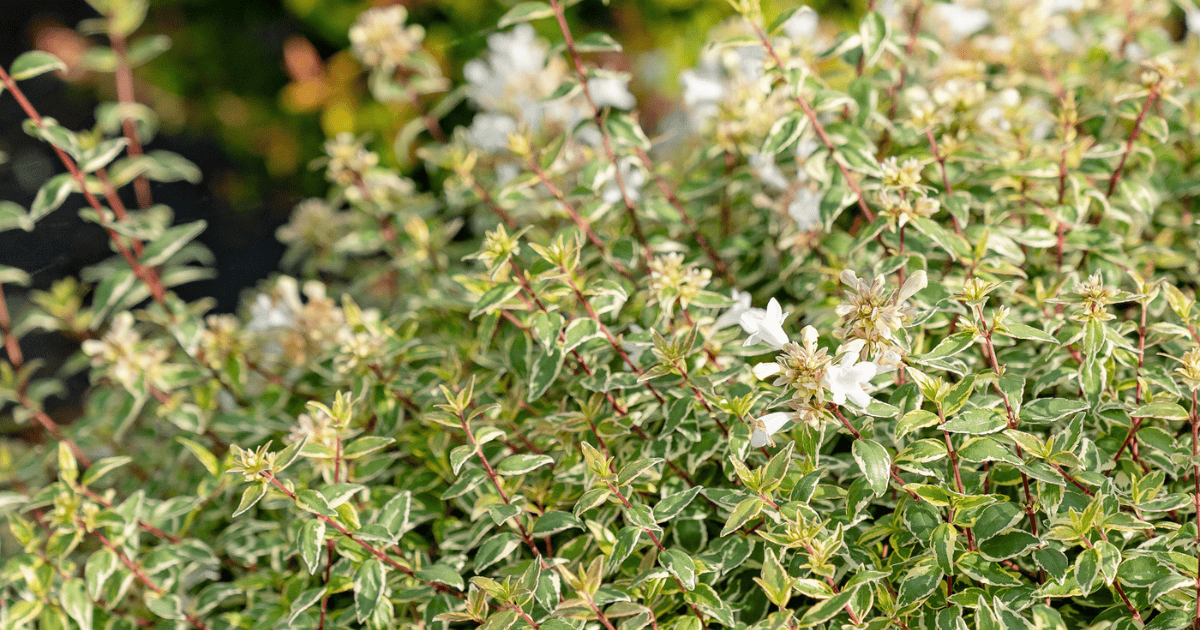
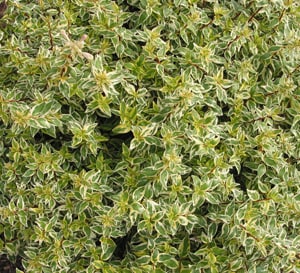
Radiance brings light and contrast to the landscape with variegated foliage in shades of green, creamy yellow, silver, and cream. Crimson stems provide an additional layer of color, while fragrant white flowers continue from summer into fall. Hardy in Zones 6–10, this compact shrub grows approximately 2–3 feet tall and 3–3.5 feet wide. Its low, spreading habit makes it especially useful near the front of a border, along a walkway, in containers, or planted in groups as a colorful ground-level accent.
In a shade garden, pale foliage can help visually lift an area that might otherwise feel heavy or dark. Try pairing Radiance with deeper green shrubs, dark mulch, or burgundy foliage to make its creamy variegation and crimson stems stand out!
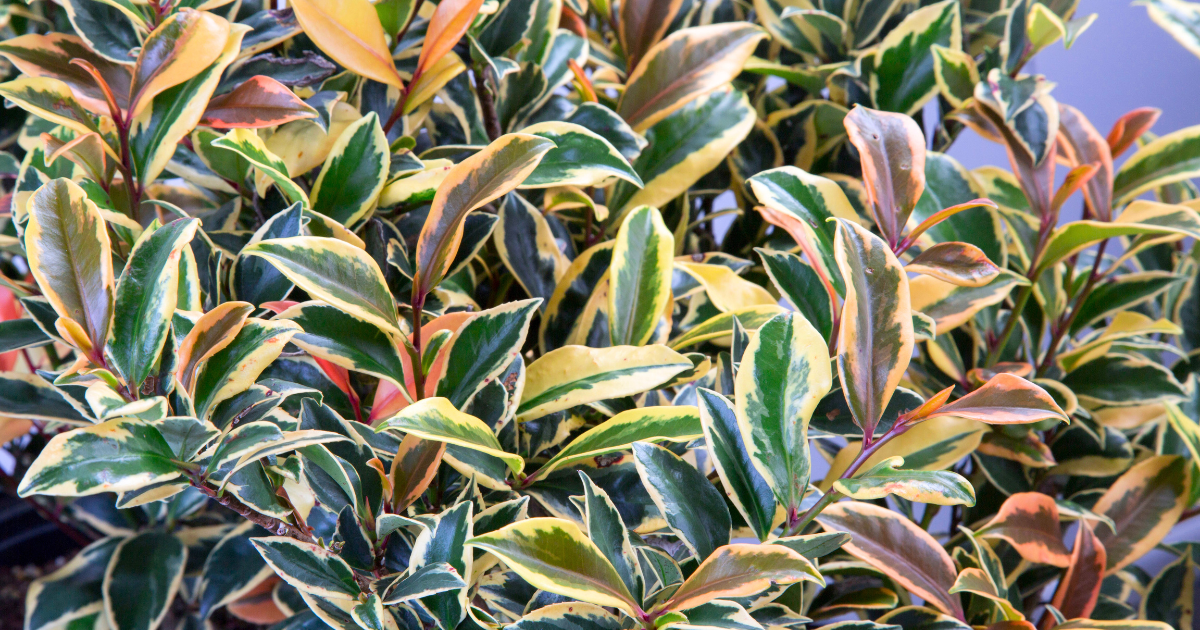
Romeo® Cleyera
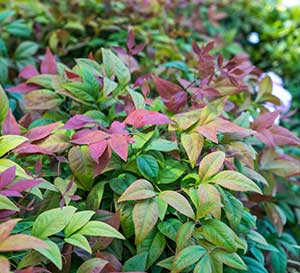
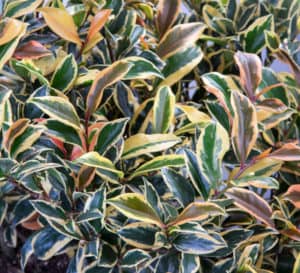
Romeo adds polished color and upright structure to the shade garden. Its glossy green and creamy yellow variegated foliage provides year-round interest, while cooler weather draws out rosy pink tones for an extra seasonal display. Hardy in Zones 7–10, this evergreen shrub has a compact, upright habit that works well as an accent, hedge, screen, foundation plant, container specimen, or mass planting. It is also easy-care, heat-tolerant, and pest-resistant.
Because of its taller, more vertical form, Romeo can help anchor the middle or back of a layered planting. Lower-growing shrubs and groundcovers can then be arranged in front of it to create depth and keep the garden from looking flat.
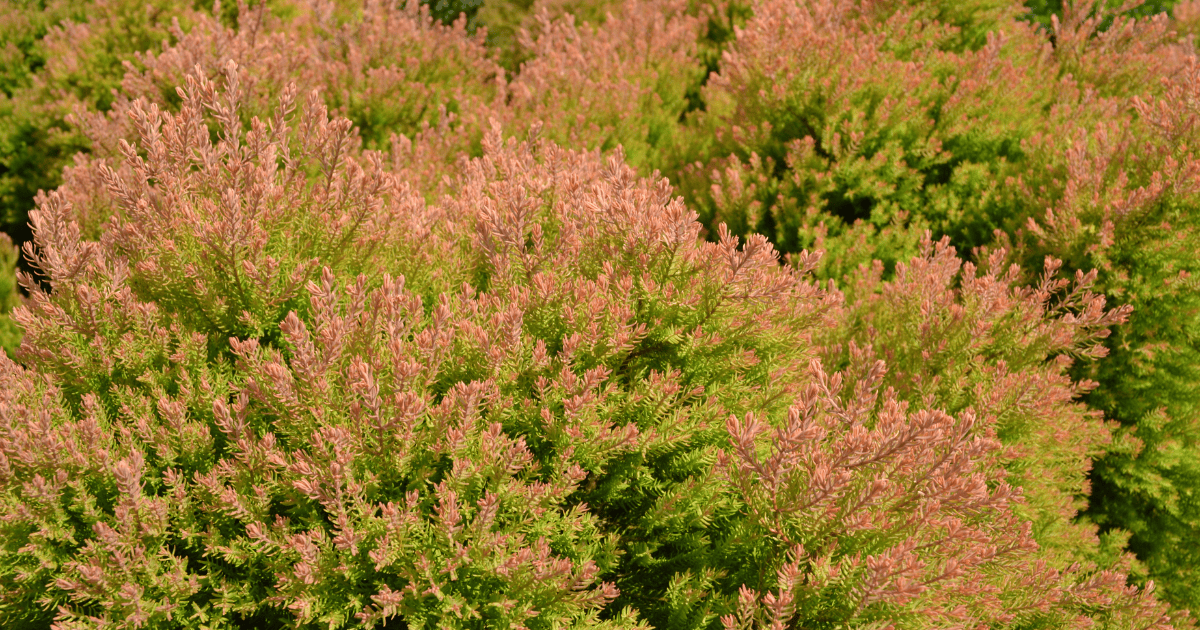
Fire Chief™ Arborvitae
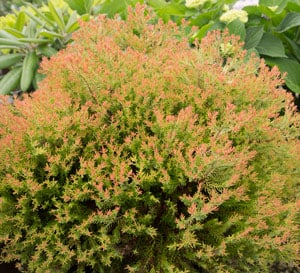
Fire Chief introduces soft, feathery texture and warm foliage color to the garden. Its evergreen foliage shifts through shades of fresh green, gold, orange, and copper, creating interest across the seasons. Its naturally rounded, compact habit makes it easy to use as a low hedge, foundation accent, border plant, or mass planting. Unlike taller arborvitae varieties, Fire Chief stays smaller and tidy, making it a useful option for areas where you want evergreen structure without adding too much height.
Texture is especially important in shaded plantings, where subtle differences in leaf shape can have a major visual impact. The fine foliage of Fire Chief contrasts beautifully with broader, glossy leaves and helps break up large masses of green.
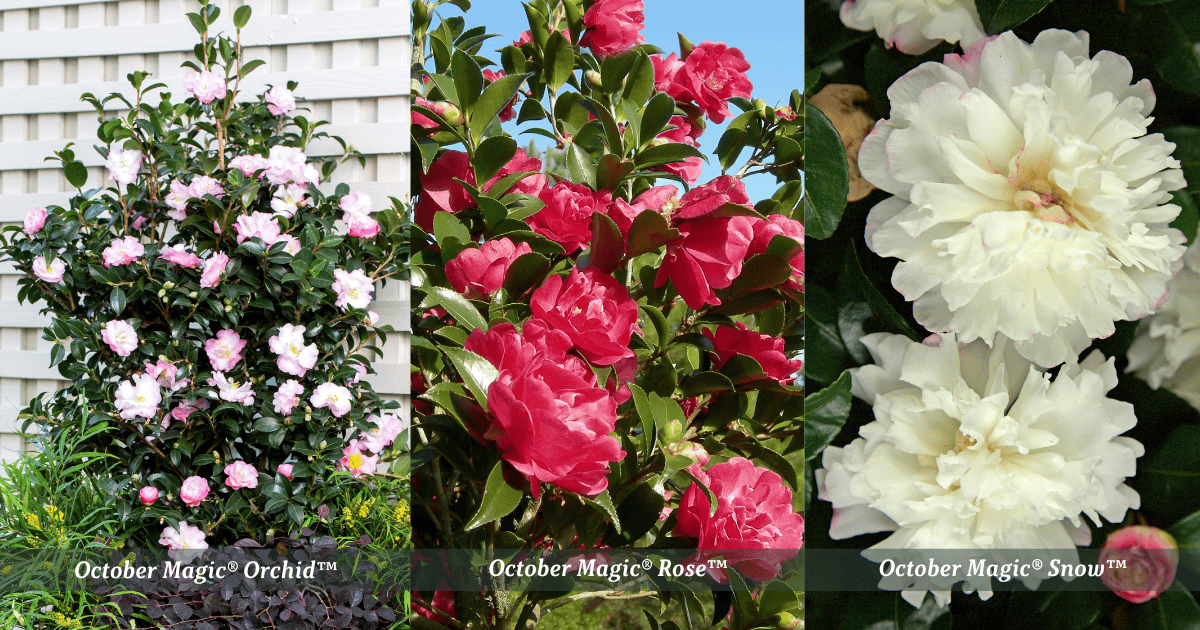
October Magic® Camellias
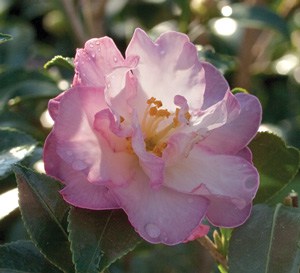
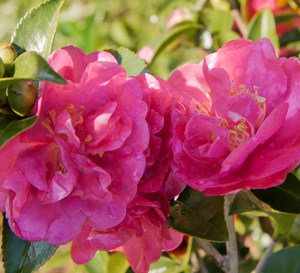
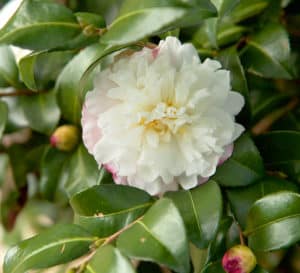
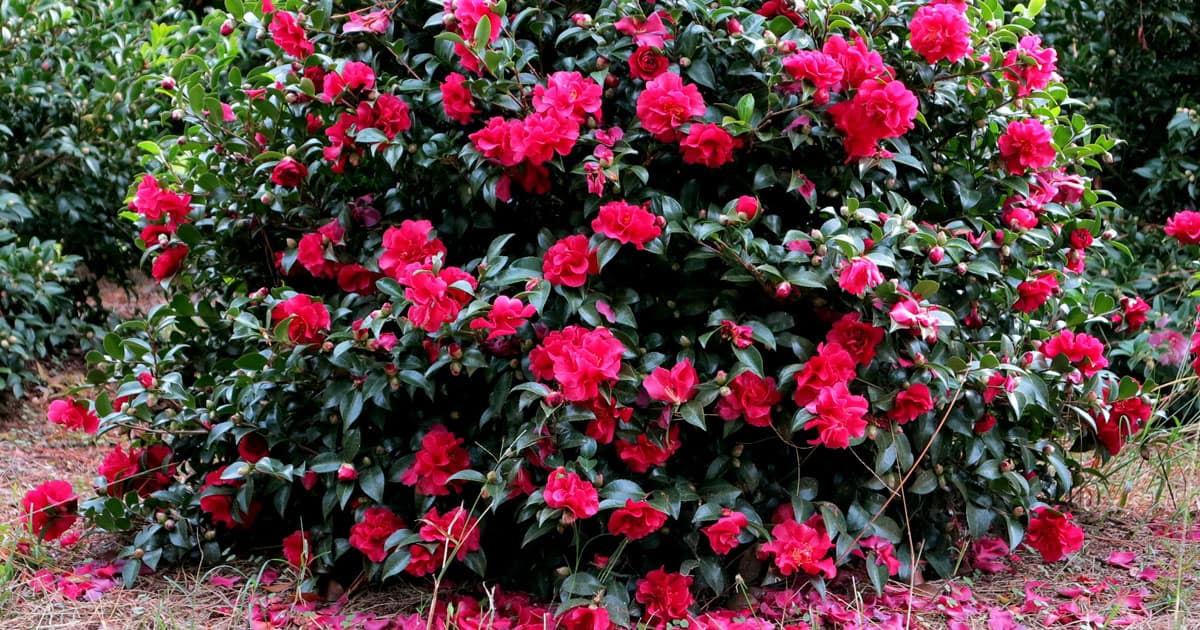
October Magic Camellias bring both flowers and foliage to the shade garden. Their autumn blooms appear when many other plants are beginning to slow down, adding welcome color during a quieter time in the landscape. These classic Southern shrubs also provide glossy evergreen foliage and graceful form throughout the year. With varieties offering flowers in shades of white, blush, pink, and red, these camellias can complement a wide range of garden styles and color palettes.
Plant them where their flowers can be enjoyed up close, such as near an entryway, beside a garden path, along a woodland edge, or near a patio. Even when they are not in bloom, their evergreen foliage helps give the garden a finished, established look.
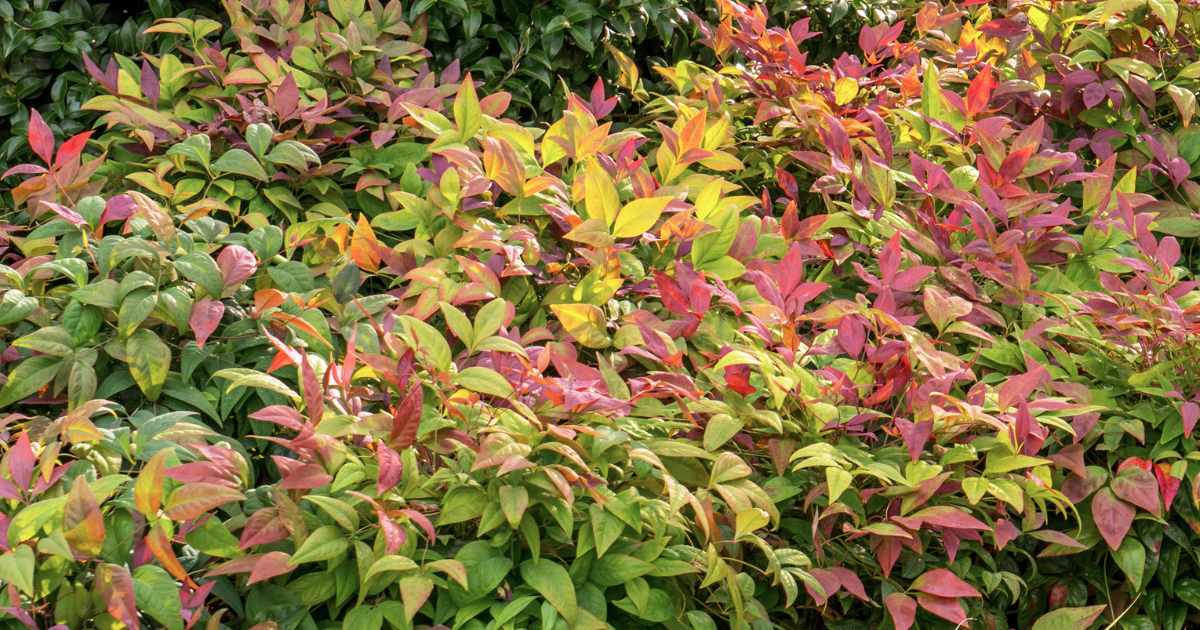
Blush Pink™ Nandina
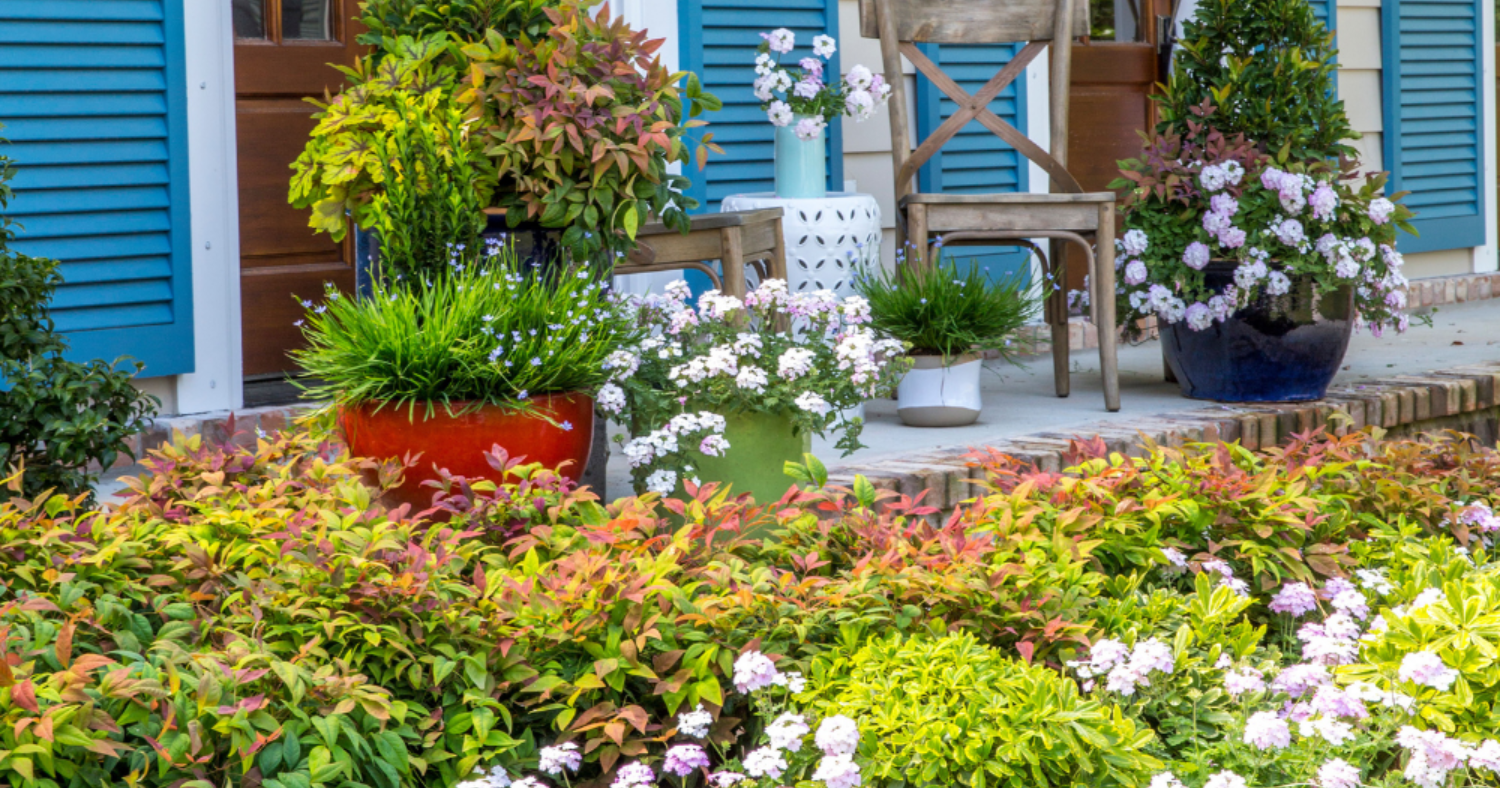
Blush Pink provides changing foliage color and fine texture throughout the year. Bright pink new growth softens to blush before maturing to deep green, then deepens again to shades of red and crimson during cooler weather. Hardy in Zones 6–10, this compact evergreen reaches approximately 2 feet tall and 1.5–2 feet wide. Its low-growing habit makes it easy to use as a border plant, low hedge, container specimen, mass planting, or colorful accent beneath taller shrubs.
Its compact size, deer resistance, and year-round foliage interest make it a practical choice for gardeners who want dependable color without frequent pruning or extensive maintenance.
How to Build a More Interesting Shade Garden
A successful shade garden depends on more than choosing individual plants. The most engaging designs combine different foliage colors, textures, heights, and shapes so the planting feels layered rather than flat.
Layer Plants by Height
Place taller, upright shrubs toward the back of the bed, medium-sized rounded plants through the middle, and lower-growing selections near walkways and borders. This allows each plant to remain visible while creating a natural progression through the garden.
Romeo® Cleyera and October Magic® Camellias can provide height and structure, while Fire Chief™ Arborvitae adds rounded form. Suntastic™ ‘Radiance’ Abelia and Blush Pink™ Nandina can help fill the front of the planting with color and texture.
Use Foliage Contrast
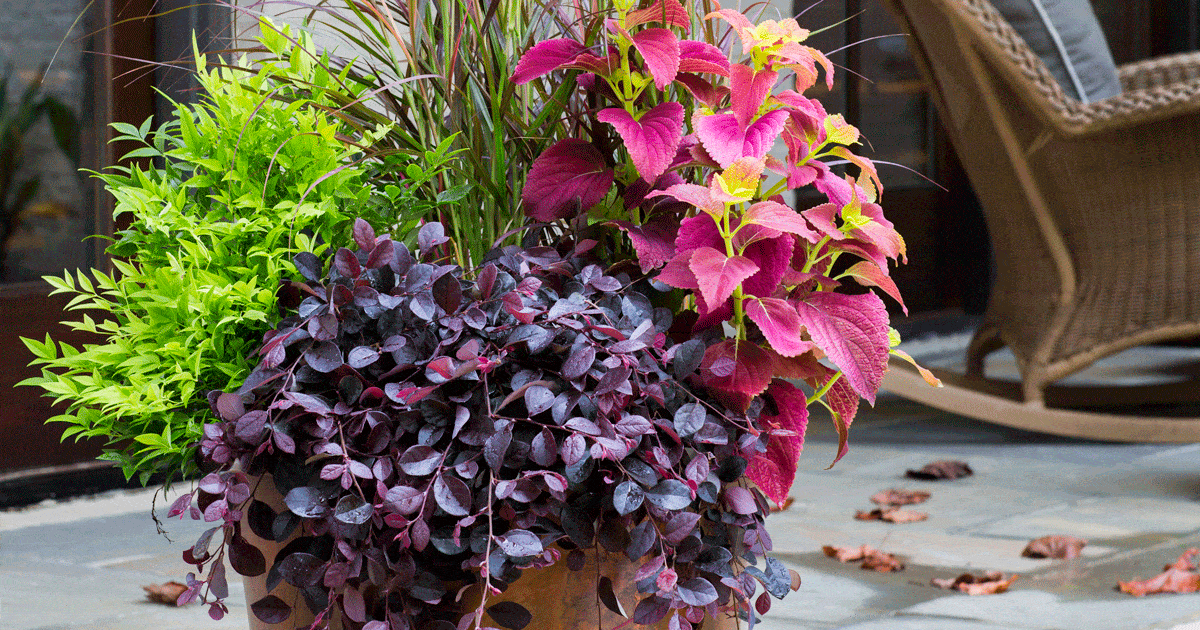
Combine broad, glossy leaves with fine or feathery foliage to make each plant more noticeable. Contrasting light and dark foliage can also help define different areas of the garden. Creamy variegation can brighten a darker planting, while deep green foliage provides a calm backdrop. Pink, burgundy, gold, and copper tones can then be used as accents throughout the bed.
Repeat Plants for a Cohesive Look
Repeating the same shrub in several places helps connect the landscape. Try using matching groups along a walkway, on both sides of an entry, or at intervals throughout a foundation planting. Repeating plants does not mean every section must look identical. Instead, it creates a visual rhythm that makes the overall garden feel more intentional.
Think Beyond Flowers
Flowers may come and go, but foliage provides the foundation of a shade garden. Evergreen leaves, variegation, colorful new growth, and distinct plant forms can keep the space looking attractive even between bloom periods. Choose shrubs with more than one appealing feature so the garden continues to offer interest throughout the year.
Shade Garden Care Tips
Newly planted shrubs need consistent care while their roots become established. Check both the original root ball and the surrounding soil before watering, since one area may dry out faster than the other. Water deeply when the soil begins to dry rather than applying only a light sprinkle to the surface.
A layer of mulch can help retain soil moisture, reduce weeds, and give the planting a more polished appearance. Keep mulch a few inches away from the base of each plant so it does not build up against the stems.
Before planting, review the individual plant label for spacing, mature size, and recommended growing conditions. Giving each shrub enough room to reach its natural form can reduce future pruning and help the garden look balanced as it matures.
Give Your Shade Garden a Fresh Start
Shady parts of the landscape do not have to feel empty or overlooked. By combining colorful foliage, evergreen structure, varied textures, and seasonal flowers, you can create a garden that feels layered, polished, and full of life throughout the year. Start with one shrub to refresh a container or border, or combine several to transform an entire shaded planting.