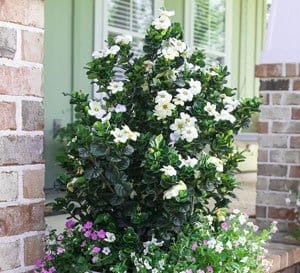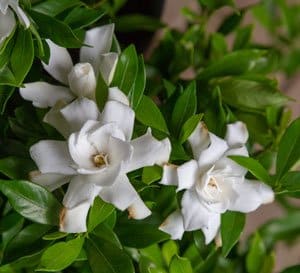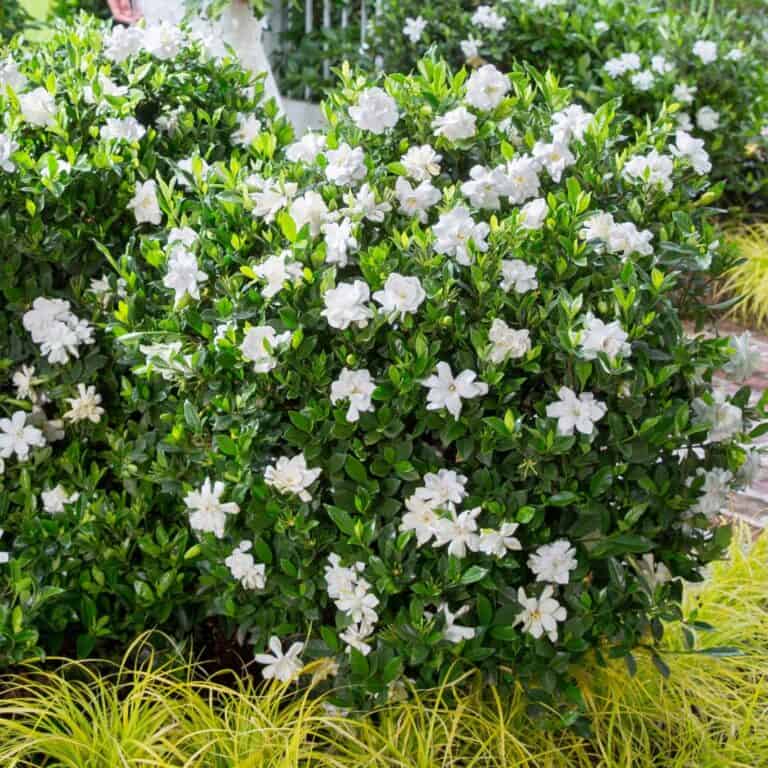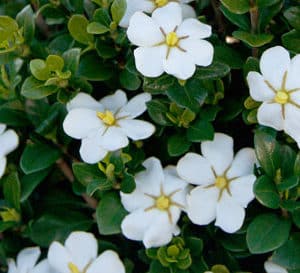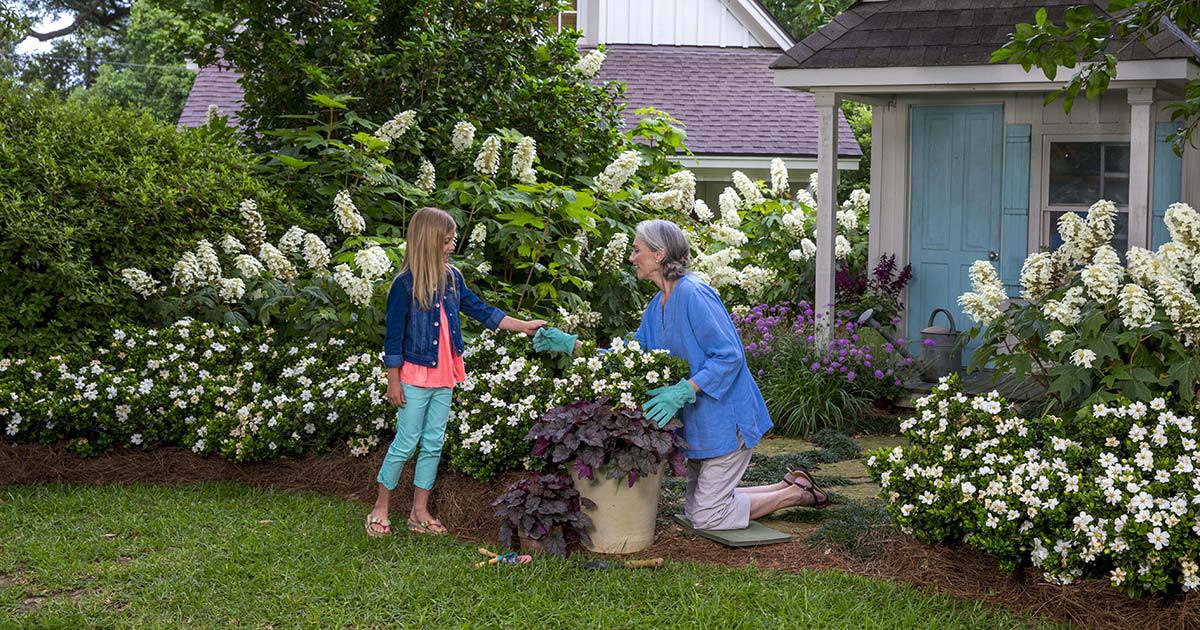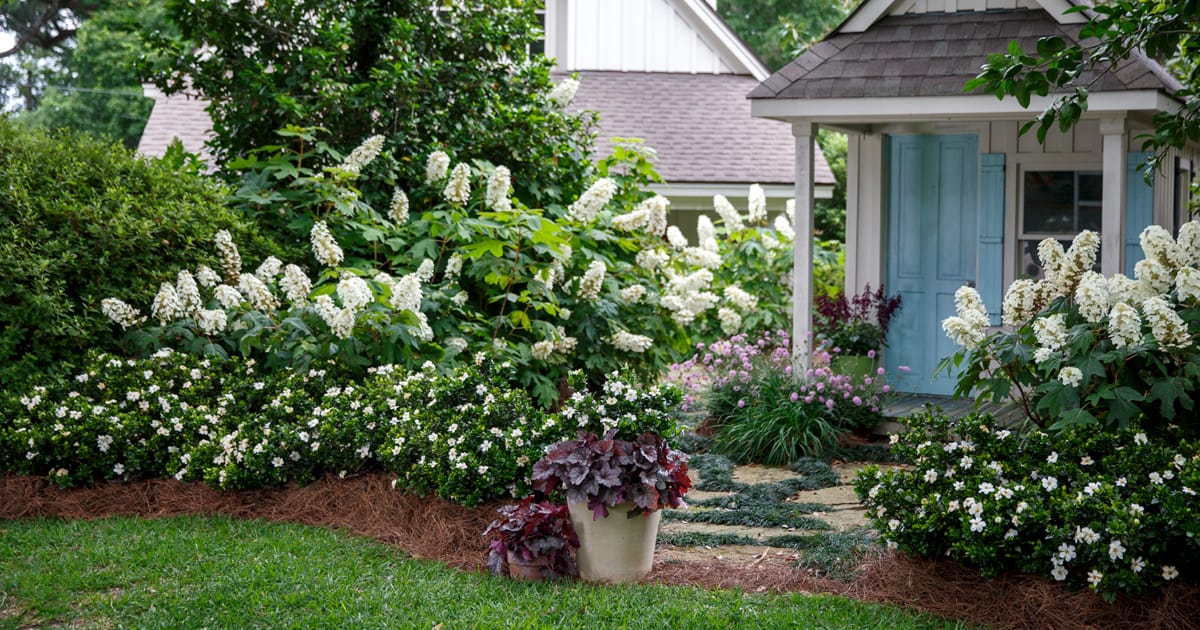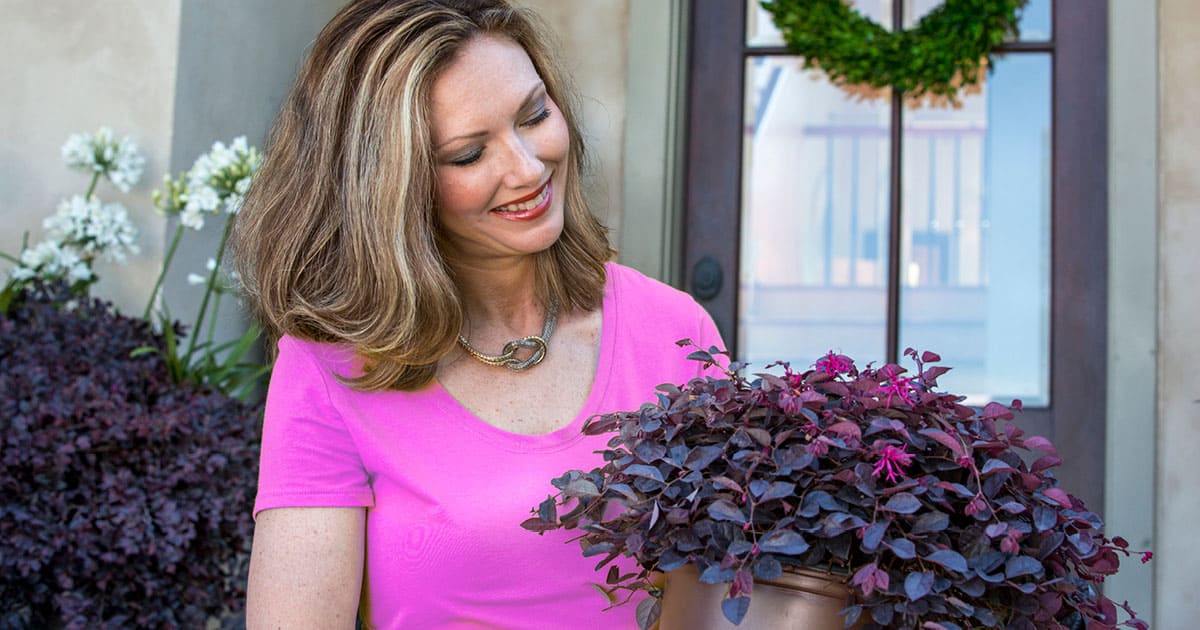
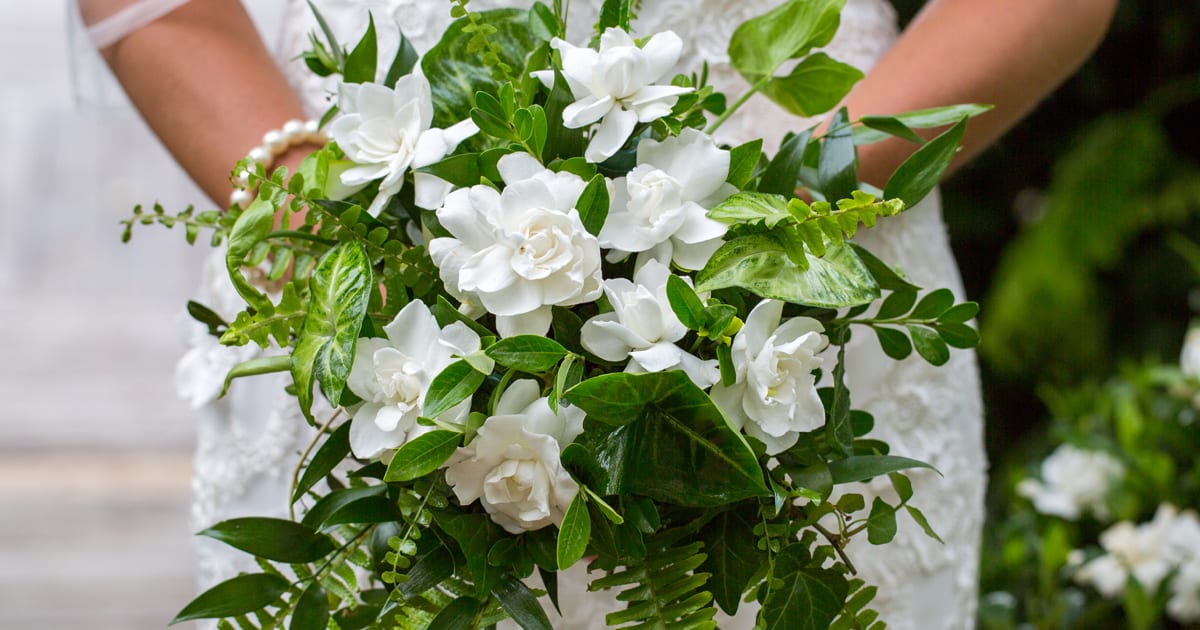
There’s a reason gardenias have been beloved in Southern gardens for generations. With glossy evergreen foliage, creamy white flowers, and that unmistakable fragrance, a gardenia bush can make a porch, patio, walkway, or foundation planting feel pretty as a peach.
But gardenias do appreciate the right care. From gardenia sun requirements to acidic soil, watering, pruning, and bloom time, these frequently asked questions will help you keep your gardenias looking their Sunday best.
When do gardenias bloom?
Gardenias typically bloom from late spring into summer, with many reblooming varieties producing additional flowers through summer and into fall. Bloom time depends on the variety, your USDA growing zone, and the weather.
Southern Living Plant Collection gardenias are selected for repeat blooming, meaning they can offer more than one flush of fragrant flowers in a season. They begin blooming in late spring and rebloom through fall. For the best blooms, give gardenias the right light, consistent moisture, and acidic soil. Avoid pruning too late in the season, since gardenias set buds for future flowers in late summer and fall.
What are gardenia sun and light requirements?
Southern Living Plant Collection gardenias can grow in full sun to part shade, with well-drained, slightly acidic soil. A location with morning sun and afternoon shade can help keep gardenia flowers fresh and reduce stress during hot weather.
For strong growth and plenty of blooms, plant gardenias where they receive several hours of sunlight each day. If your gardenia is in a container, place it near a porch, patio, or entryway where it gets bright morning light and a little afternoon relief.
How big do gardenias get?
Gardenia size depends on the variety. Many compact gardenia bushes grow around 3 to 4 feet tall and wide, while upright or narrow selections may stay slimmer.
For example, Jubilation™ Gardenia reaches about 3 to 4 feet tall and wide, making it useful for accents, containers, hedges, and mass plantings. Diamond Spire® Gardenia grows about 3 to 4 feet tall and approximately 2 feet wide, giving it a more upright, narrow habit for tighter spaces.
Before planting, always check the mature size of your specific variety. Giving your gardenia enough room to grow means less pruning later and a healthier, more natural shape.
How do you care for Southern Living gardenias?
Gardenia care starts with the right planting spot. Choose a location with full sun to part shade, well-drained soil, and good air circulation. Gardenias prefer soil that stays evenly moist but not soggy.
Gardenias have shallow roots, so mulch is especially helpful for protecting roots, conserving moisture, and reducing weeds without disturbing the soil.
To care for gardenias:
- Plant in well-drained, slightly acidic soil.
- Water deeply after planting and during dry periods.
- Add mulch to help maintain even soil moisture.
- Fertilize with an acid-loving plant fertilizer as directed.
- Prune after the main spring bloom, if shaping is needed.
- Avoid heavy pruning in late summer or fall.
What is the best gardenia bush care routine?
A good gardenia bush care routine is simple: sunlight, moisture, acidic soil, and timely pruning.
In spring, check your plant for winter damage and feed with an acid-formulated fertilizer if needed. During the growing season, water consistently, especially during hot or dry weather. After the main bloom flush, lightly prune to shape the plant. By late summer, let the plant be so it can set buds for next year’s flowers.
Gardenias do not usually need heavy pruning. A light trim after flowering is often enough to keep the plant tidy and full.
How do you care for gardenias in pots?
Gardenias grow beautifully in containers when given the right conditions. Choose a pot with drainage holes and use a high-quality potting mix designed for acid-loving plants.
Place container gardenias where they receive bright light, ideally morning sun and afternoon shade. Water when the top inch or so of soil feels dry, but do not let the pot sit in standing water. Container gardenias may dry out faster than gardenias planted in the ground, so check them often during hot weather.
Potted gardenias are especially lovely near porches, patios, doors, and outdoor seating areas where you can enjoy their fragrance up close.
Do gardenias need acidic soil?
Yes. Gardenias prefer acidic soil, ideally with a pH between 5.0 and 6.5. When soil is too alkaline, gardenias may struggle to absorb nutrients, which can lead to yellowing leaves, poor growth, or fewer blooms.
If your gardenia is not thriving, a soil test is the best place to start. It can tell you your soil pH and help you choose the right fertilizer or amendment.
What kind of fertilizer do gardenias need?
Gardenias benefit from fertilizer formulated for acid-loving plants, such as azaleas, camellias, and gardenias. Apply according to label directions and avoid overfertilizing, which can stress the plant. If a soil test suggests that your soil and plants would benefit from acidic fertilizer, feed your gardenias when new growth begins in spring and again in mid-summer.
How often should you water gardenias?
Gardenias like consistent moisture, especially while they are establishing and while flower buds are forming. Water deeply, then allow the soil to drain. The goal is evenly moist soil, not wet feet.
Too little water can cause bud drop before flowers open, while soggy soil can lead to root problems. Mulch helps keep moisture more consistent through hot Southern weather.
When should you prune gardenias?
Prune gardenias after the main spring bloom or in early summer, if needed. Avoid pruning in late summer or fall because gardenias begin setting buds for the following season during that time. Pruning too late may remove next year’s flowers.
Remove faded flowers anytime, but save shaping and trimming for just after bloom.
Why is my gardenia not blooming?
A gardenia may not bloom if it is getting too much shade, not enough water, improper fertilizer, alkaline soil, or pruning at the wrong time. Weather stress can also affect bud formation and flowering.
To encourage more gardenia blooms, make sure your plant receives bright light, consistent moisture, and acidic soil. Prune only after flowering, and feed with an acid-loving plant fertilizer during the growing season.
Are gardenias evergreen?
Most gardenias grown in Southern landscapes are evergreen shrubs, meaning they keep their glossy green foliage year-round in the right climate. This makes them useful not only for fragrant flowers, but also for structure, foundation plantings, low hedges, and containers.
Where should I plant gardenias?
Plant gardenias where you can enjoy their fragrance: near a porch, patio, walkway, gate, window, or outdoor seating area. They also work well as foundation shrubs, low hedges, accents, and container plants.
Choose a spot with full sun to part shade, well-drained acidic soil, and room for the plant to reach its mature size. Good gardenia placement is part beauty, part hospitality—just as welcoming as a porch light left on.
Which Southern Living gardenias should I consider?
Southern Living Plant Collection offers several gardenias bred or selected for beauty, fragrance, reblooming, compact habits, and improved performance:
- Plant Jubilation™ Gardenia for a compact, classic gardenia with fragrant, double, white blooms.
- Plant ScentAmazing® Gardenia for reblooming, fragrant, daisy-shaped flowers and a compact size.
- Plant Diamond Spire® Gardenia for an upright, narrow habit that works well in smaller spaces.
- Plant Fool Proof™ Gardenia for an easy-care, disease-resistant selection with fragrant blooms.
Shop Southern Living Gardenias to Your Doorstep with this Gardenia Guide.